
Author Archive
Why Fences Fail in South Texas and How to Make Sure Yours Doesn’t
If you’ve lived in South Texas for any length of time, you’ve probably seen it: a fence that looked great when it was installed, now warped, leaning, or half-collapsed just a few years later. It’s more common than it should be and it’s almost always preventable.
At Quality Fence & Welding, we’ve been building fences in San Antonio and across Texas since 1980. We’ve seen every kind of failure, and we know exactly what causes them. Here’s what’s really going on when a fence doesn’t hold up in our climate.
The South Texas difference
Our region is genuinely one of the most demanding environments for fence materials anywhere in the country. The combination of factors we deal with here is unique:
- Extreme heat: triple-digit summers expand metal and dry out wood faster than almost anywhere else
- Expansive clay soil: the soil in much of San Antonio and the Hill Country swells when wet and shrinks when dry, constantly shifting post footings
- Severe storms: hail, high winds, and flash flooding can stress a fence well beyond what it was designed for
- UV exposure: intense sun breaks down wood fiber, oxidizes coatings, and fades paint over a matter of seasons
“South Texas doesn’t care about your warranty. The climate here will expose every shortcut in materials and installation.”
The most common failure points
1. Post depth and footing quality
This is where most fences fail, and it’s invisible until something goes wrong. Posts that aren’t deep enough or that weren’t set in proper concrete — shift with the soil. When the soil expands after rain and contracts in a dry spell, a shallow post walks. Over time, even a small lean becomes a collapse.
The rule of thumb is one-forth of the post length in the ground. For an 8-foot post, that’s nearly 2 feet of depth. In our clay-heavy soils, we often go deeper, and we use properly mixed concrete not dry mix dropped in the hole.
2. Wrong materials for the climate
Pine treated for ground contact has a place, but it’s not the right choice for a privacy fence in San Antonio. It checks, warps, and absorbs moisture in ways that accelerate decay. Cedar is a far better performer it’s naturally resistant to insects and rot, and it handles temperature swings better than most softwoods.
On the metal side, uncoated or poorly coated steel will rust in our humidity, particularly near gutters, downspouts, or low spots where water collects. Proper powder coating not just spray paint makes an enormous difference in how long a metal fence lasts.
3. Poor installation shortcuts
High winds don’t knock down well-built fences. They expose the ones that were built with the wrong hardware, skipped pickets, inadequate backer rails, or posts set in dry soil. We see this regularly after major storms and the damage is almost never random. The fences that fail are the ones that had shortcuts taken during installation.
What a properly built fence looks like
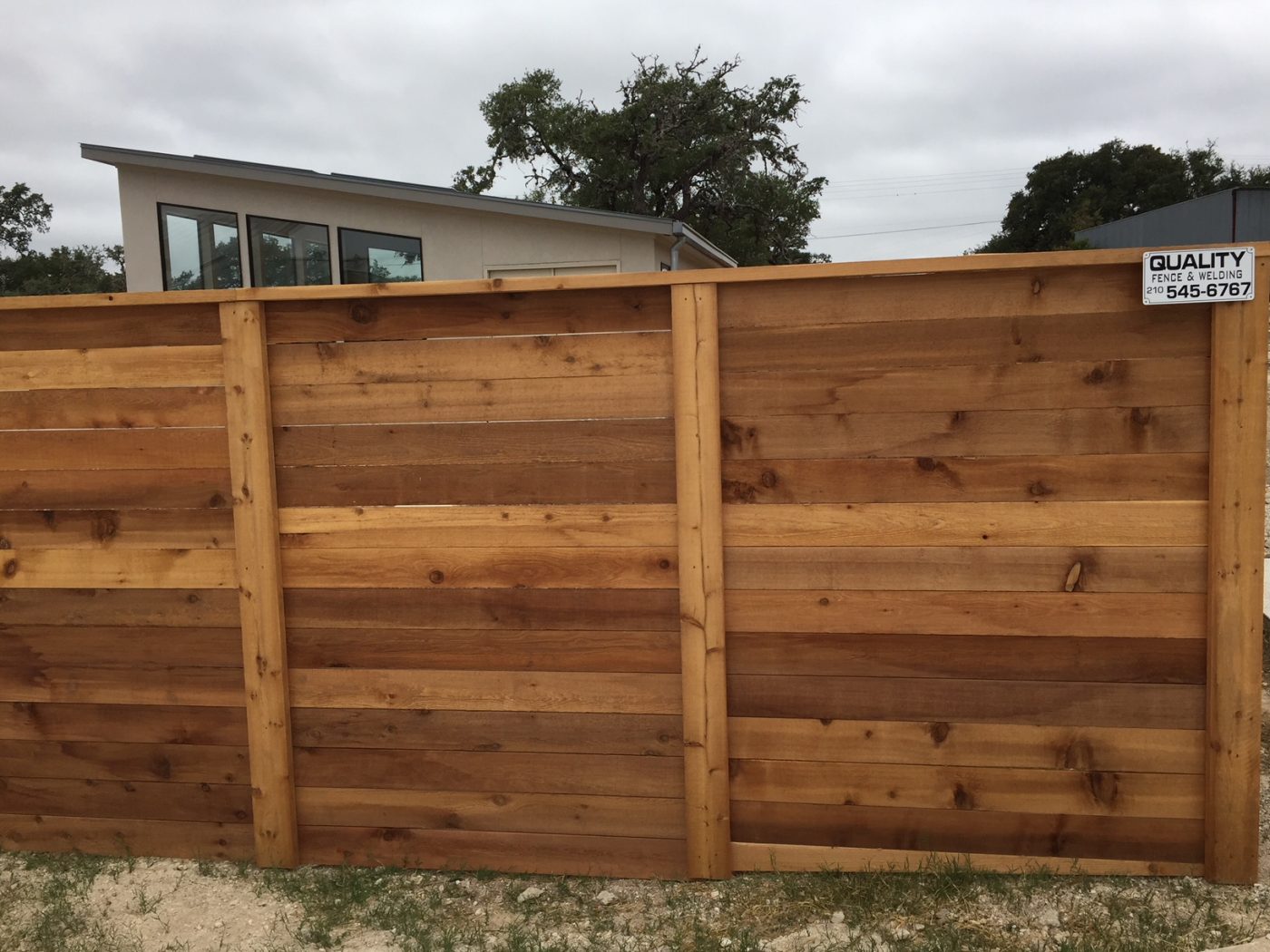
A fence that holds up in South Texas is built from the ground up with the climate in mind. That means:
- Posts set at the correct depth in quality concrete
- Materials selected for heat, UV, and moisture resistance
- Hardware rated for outdoor exposure not interior-grade screws or fasteners
- Rails and pickets fastened correctly so the structure works as a unit, not a collection of parts
- Coatings or finishes applied to properly prepped surfaces
Quality Fence & Welding inspects every job before it leaves our hands. We’ve been doing this since 1980 — we know what South Texas demands.
If you’re planning a new fence or replacing one that didn’t hold up, give us a call at 210-545-6767 or get a free online estimate at saqualityfence.com. We’ll tell you exactly what your property needs and build it to last.